

The "Hidden" Bacteria: Why Your Gut Is More Mysterious Than You Think
Kevin GillespieYou've probably heard about gut bacteria. Maybe you're already smashing kombucha, eating sauerkraut, and thinking you've cracked the code. But scientists just discovered something absolutely wild: two-thirds of the bacteria in your gut were completely unknown until recently.
We're not talking about some obscure corner of the Amazon rainforest here. We're talking about the ecosystem living inside your body right now. The place you've been trying to optimise with yoghurt and probiotic pills.
Turns out, we've been fumbling around in the dark this whole time.
Meet the Patescibacteria: The Bacteria We Missed
Researchers have identified a group of bacteria called Patescibacteria (also known as Candidate Phyla Radiation, if you want to sound clever at dinner parties). These little buggers are so ridiculously small that they were overlooked for years.
We're talking ultrasmall. Microscopic even by bacteria standards.
And here's the kicker: they're everywhere. Specifically, they're common in people with healthy gut profiles. Low inflammation. High immunity. All the good stuff we're chasing in our 30s and 40s when we realise we can't just eat kebabs and bounce back like we did at 22.
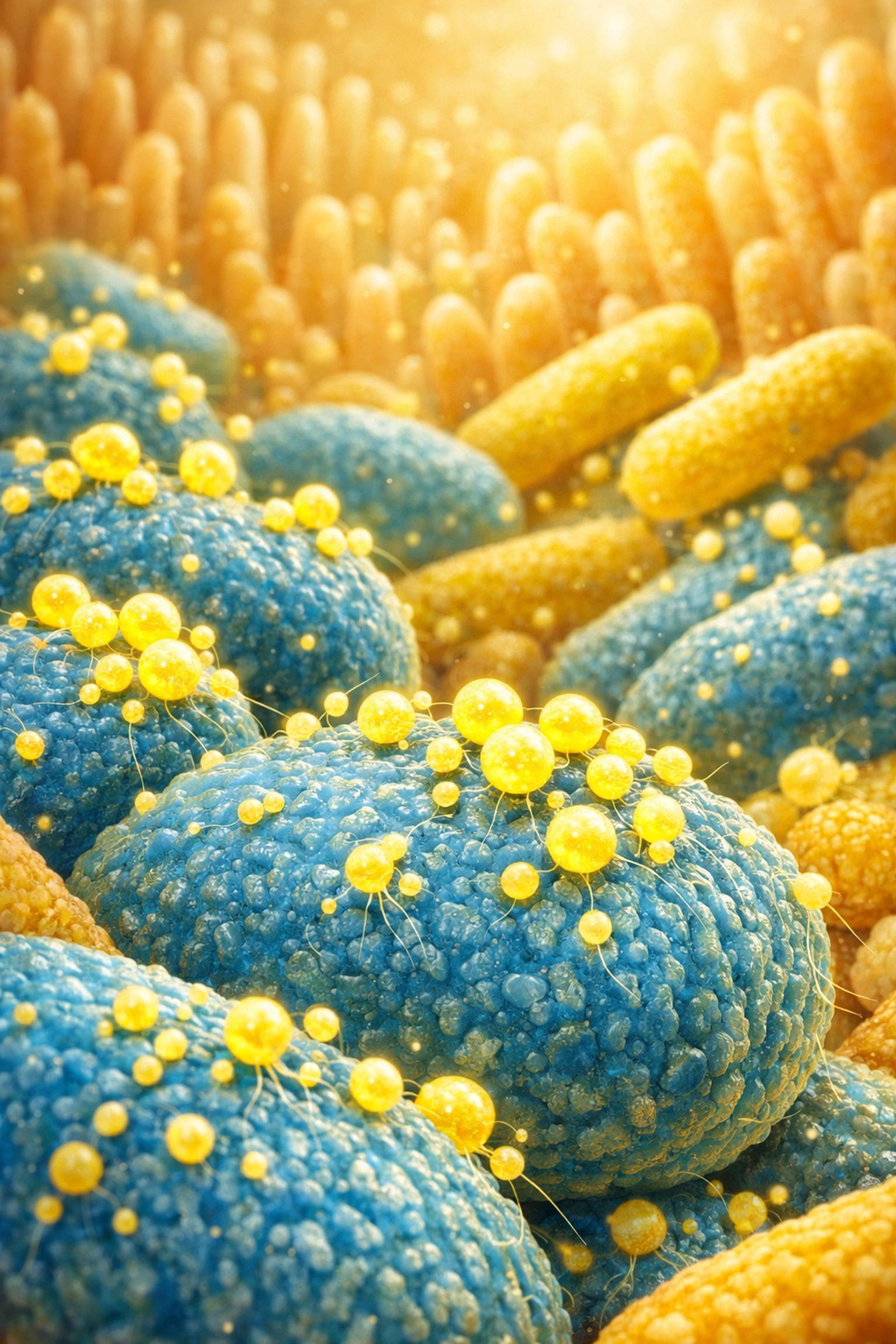
The reason they were missed? Traditional laboratory methods couldn't culture them. They only exist because they've evolved to attach themselves to other bacteria, living as what scientists call epibionts. Basically, they're the ultimate freeloaders of the gut world, hitching rides on their bigger bacterial mates.
But don't let that fool you. These tiny hitchhikers might be absolutely essential to your health.
Why This Changes Everything About Gut Health
For years, the probiotic industry has been flogging the same old story: Lactobacillus this, Bifidobacterium that. One or two "hero" strains that supposedly fix everything from bloating to anxiety.
The discovery of Patescibacteria (and groups like CAG-170, which researchers at Cambridge found in higher numbers in healthy people) completely flips that narrative. Your gut isn't a simple garden where you plant a few probiotic seeds and call it done.
It's a massive, complex jungle.
A healthy gut microbiome contains over 3,000 bacterial species. Most of them we've never even grown in a lab. We only know they exist because of their genetic fingerprints. They're the "hidden microbiome," lurking in the background, doing god knows what to keep you ticking along.
And it turns out the diversity matters more than the individual players. CAG-170, for example, doesn't just benefit you directly. It produces high levels of Vitamin B12 and enzymes that break down carbohydrates, sugars, and fibres. It's basically feeding the entire ecosystem, supporting other bacteria so they can do their jobs properly.
The Patescibacteria? Same deal. They live by attaching to other bacteria, but in doing so, they might be regulating the whole system in ways we're only just starting to understand.

The Problem With Most Probiotics
Here's where it gets frustrating. Current probiotics haven't kept pace with microbiome research. We're still relying on bacterial species that were identified decades ago, long before we knew about these hidden groups.
It's like trying to restore a rainforest by planting two types of trees and calling it job done. Sure, those trees are helpful, but you're missing thousands of other species that make the ecosystem actually function.
The probiotic pill you bought at Holland & Barrett? It's not useless, but it's also not the full picture. Not even close.
Why Raw Kombucha Is Your Best Bet (For Now)
This is where we pivot to what we actually do at Functional Drinks Club. We're not trying to sell you a magic bullet probiotic with two strains and a flashy label. We're about diversity.
Raw, independent kombucha (the proper stuff, not the pasteurised nonsense in supermarkets) is teeming with bacterial and yeast cultures. Lactobacillus, Bifidobacterium, Acetobacter, Gluconacetobacter, and a whole load of others that vary batch to batch, maker to maker.
It's messy. It's unpredictable. And that's exactly why it works.
When you drink kombucha from multiple independent makers (like the ones we stock in our Leeds shop or deliver nationwide), you're not just getting the "famous" bacteria. You're supporting the whole hidden jungle. The tiny epibionts. The obscure strains. The ecosystem.
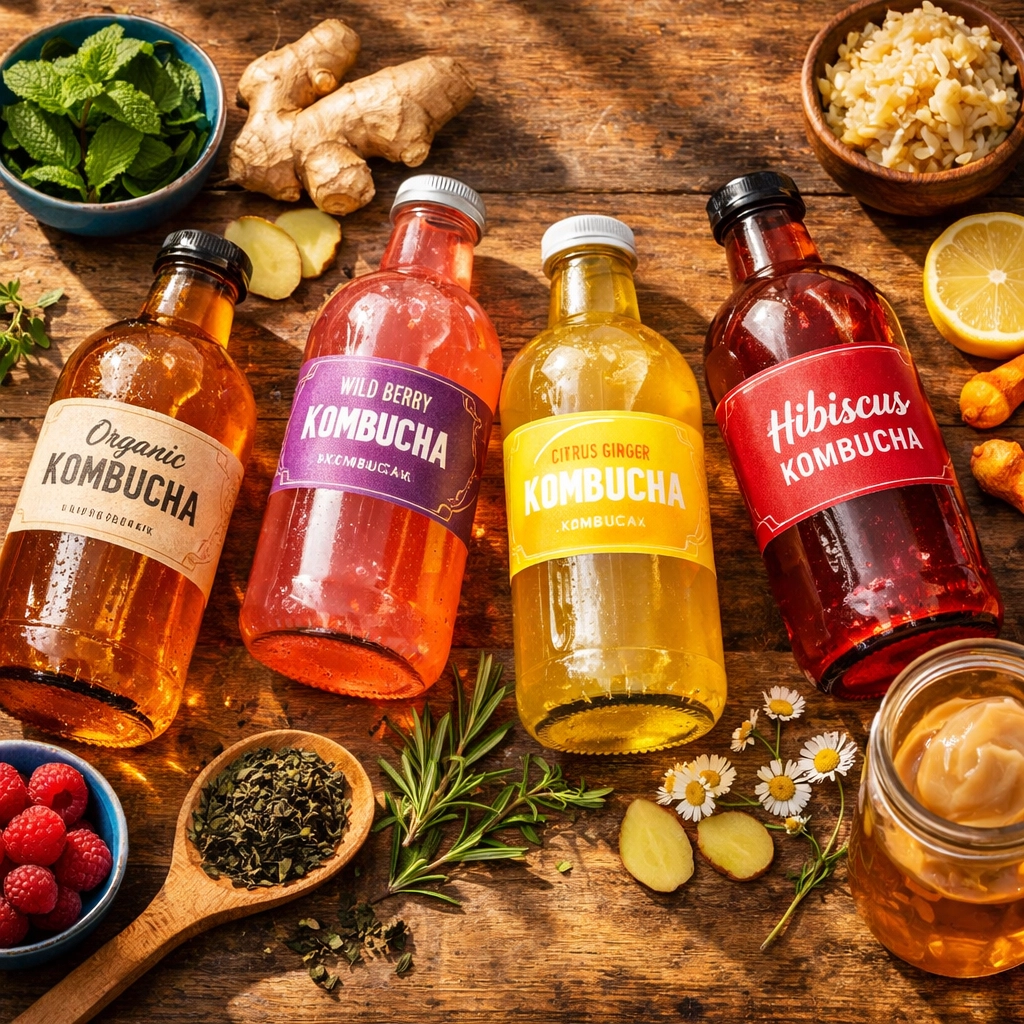
And here's the thing: scientists are only just starting to figure out what these hidden bacteria do. They might be producing compounds that regulate inflammation, support immune function, or influence your mood. We don't know yet. But by drinking diverse, raw, fermented drinks, you're hedging your bets.
You're giving your gut the tools to figure it out.
The Virome: Another Unexplored Frontier
Oh, and just when you thought it couldn't get weirder, there's also the virome. That's the collection of viruses living in your gut. Not the flu or COVID type, but bacteriophages, viruses that specifically kill bacteria.
There are an estimated one billion bacteriophages in just one gram of your faeces. They're the most abundant biological entities on Earth. And we barely understand them.
They might be regulating which bacteria thrive and which get wiped out. They could be shaping your entire microbiome, acting as the unseen puppet masters of gut health.
Bonkers, isn't it?
The point is: your gut is way more complex and mysterious than anyone's been letting on. The bacteria you can't see, the viruses you didn't know existed, the ultrasmall epibionts hitching rides on bigger microbes, they're all part of the story.

What You Can Actually Do About It
Right, enough science. What do you do with this information?
1. Stop Obsessing Over Single Strains
Forget the probiotic that promises one miracle strain. You need diversity, not a silver bullet.
2. Drink Raw, Independent Kombucha Regularly
Not just one brand. Multiple makers, multiple flavours, multiple batches. Check out our kombucha range or grab a subscription box to keep the variety coming.
3. Add Other Fermented Foods
Kimchi, kefir, sauerkraut. Stack your fermented foods to maximise bacterial diversity.
4. Think Ecosystem, Not Individual
Your gut is a jungle. Feed the whole system, not just the loudest species.
5. Come Visit Us in Leeds (Or Order Online)
We've got on-tap kombucha, bottles from independent UK makers, and a whole range of gut-friendly drinks you won't find anywhere else. If you're local, swing by. If you're not, we deliver nationwide.
The Bottom Line
The discovery of Patescibacteria and other "hidden" bacteria proves what we've suspected all along: gut health is way more complex than we thought. It's not about taking a pill with two probiotic strains and calling it done.
It's about diversity. Variety. Supporting the whole ecosystem, including the bacteria we can't even see yet.
And right now, the best way to do that is raw, independent kombucha, fermented foods, and a bit of humility about how much we still don't know.
So next time someone asks if you've "sorted your gut health," just remember: two-thirds of your gut bacteria were unknown until recently. You're not sorting anything, mate. You're just giving the hidden jungle the best chance to thrive.
And honestly? That's banging enough.


